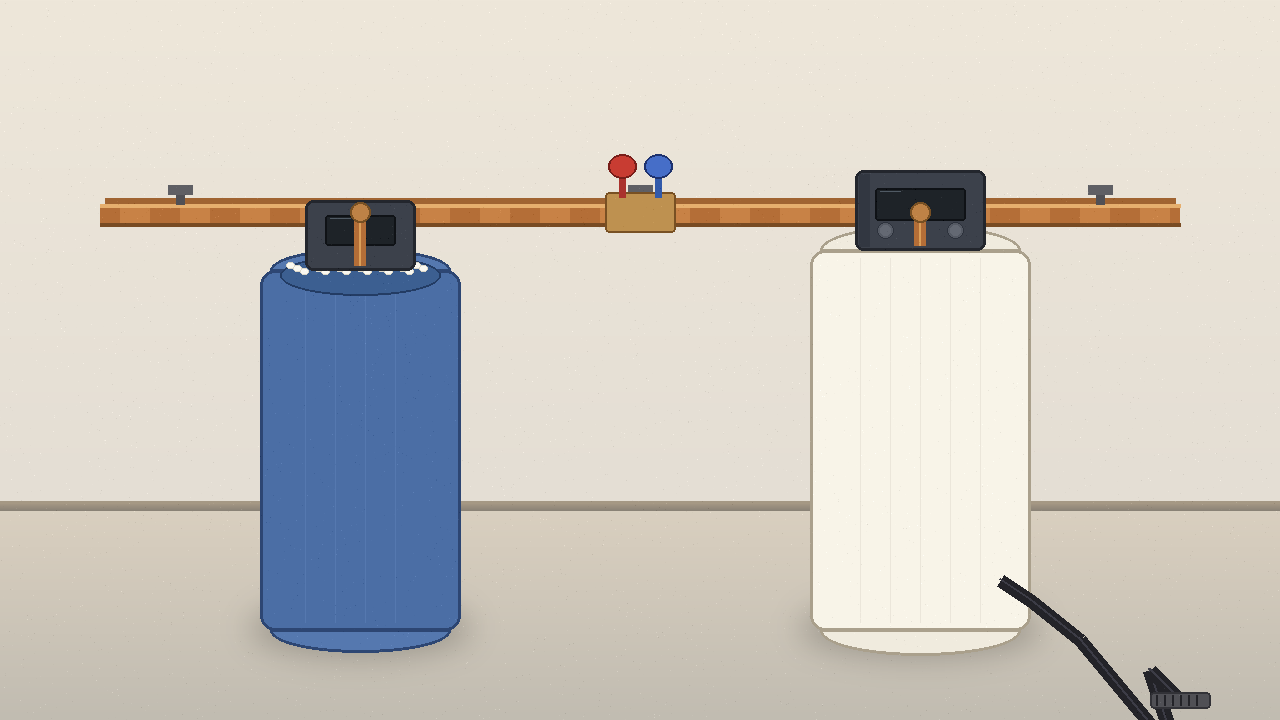
If your water suddenly feels hard again two days after a regen — soap won’t lather, dishes spot, the shower glass fogs up overnight — something is off about the cycle, not the softener. Either the brine tank ran out, the control head is set wrong, or the resin is fouled and can no longer hold the capacity it used to. Most regen problems come down to settings you can check in five minutes, and the math behind how often your softener should run is short enough to do on a napkin.
Note: this article covers salt-based ion-exchange softeners only. Salt-free conditioners don’t regenerate — they crystallize calcium to reduce scale but don’t bring hardness grains to zero on a test strip. If you have a salt-free unit and are seeing “soft water” symptoms, see the salt vs salt-free honest limits page instead.
Quick answer
A regeneration cycle is the 90-minute–2-hour brine rinse that restores the ion-exchange resin’s capacity to swap hardness out of your water. Most homes regenerate every 3–7 days, using 30–65 gallons of water and 6–15 lbs of salt per cycle. The cycle runs at 2 AM by default so it’s done before morning demand. You can also trigger it manually after a salt top-up or a long absence.
What “regeneration” actually does
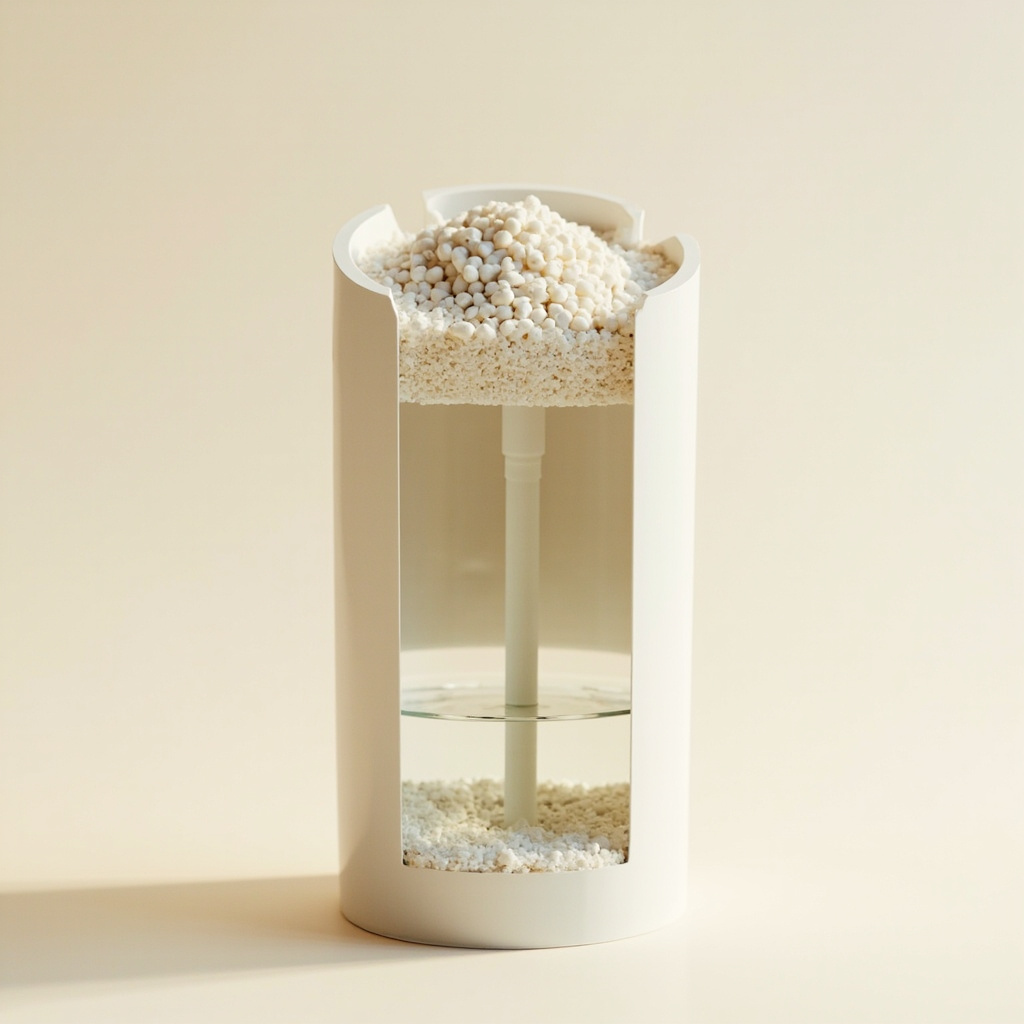
Plain-English version: brine (salt water) flows from the brine tank into the resin tank. Calcium and magnesium ions swap places with sodium ions on the resin beads. Then a rinse flushes the captured hardness down the drain. The resin is back to “loaded with sodium” and ready to soften again.[1]
You don’t need to see the chemistry to manage the cycle, but knowing the inputs makes the rest of the article make sense. The two numbers that drive regen frequency are:
- Hardness (gpg) — grains per gallon of hardness in your water. Use a hardness test kit or your utility’s Consumer Confidence Report.[2]
- Capacity (grains) — how much hardness the resin tank can hold before it needs to regen. Most residential tanks are 24,000–48,000 grains.
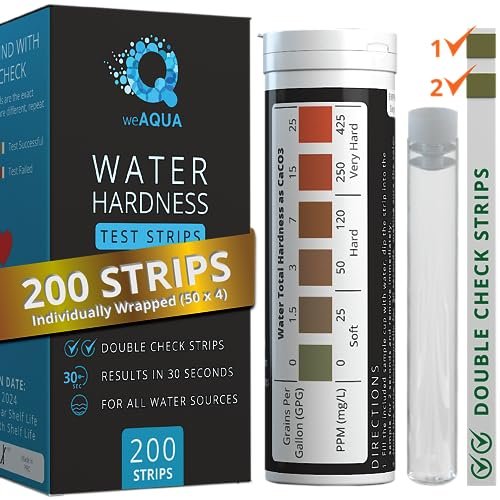
If you want to see whether your last regen actually worked, a water hardness test kit tells you in 30 seconds — dip a strip in the softened water, compare to the color chart, and confirm you’re at 0 gpg.
This article is about cycle behavior, not the chemistry. For the deeper walkthrough of ion-exchange and how the brine tank fits in, see how water softeners work.
How often the cycle runs (frequency math)
The interval is set by one equation:
days between regens = resin capacity (grains) ÷ (people × gallons/day/person × hardness gpg)
Worked example: 32,000-grain tank, 4 people × 75 gal/person/day = 300 gal/day, 20 gpg hardness → 32,000 ÷ (300 × 20) = 32,000 ÷ 6,000 = 5.3 days between regens.
That’s why “every 3–7 days” is the honest range — a 24,000-grain tank in a 2-person home with 10 gpg hardness can stretch past a week, while a 32,000-grain tank with 6 people at 25 gpg runs every other day. Both are doing exactly what the math says.
A few realities push the actual interval shorter than the formula:
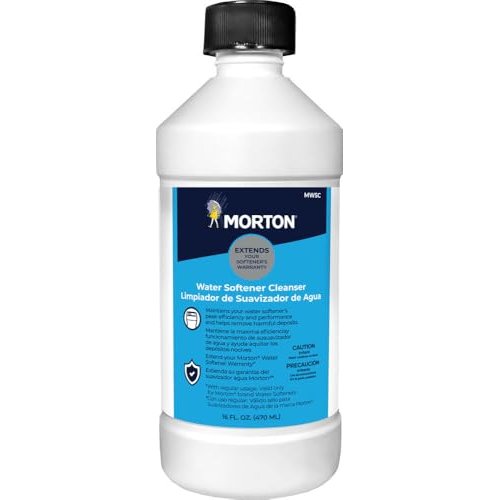
- Iron in the water (above 0.3 ppm) coats the resin beads and reduces effective capacity. Add a resin cleaner like Morton MWSC every 4 months or the interval keeps creeping up.
- Salt setting on the control head higher than your measured hardness burns through capacity you didn’t actually need to remove. Confirm your gpg with a hardness test kit and set it to your measured gpg, not higher.
- Reserve capacity — most metered heads reserve a small percentage of capacity as a buffer. If your softener regenerates slightly more often than the math predicts, that’s the reserve working.
If your number looks off — your tank is regenerating twice a day, or stretching past two weeks — recalculate the tank size with the softener size calculator. And if you’re regenerating more than once a week and the math says you shouldn’t be, the tank may be undersized; the how to choose a water softener page has the sizing chart.
For the background on gpg and how it drives capacity, see water hardness explained.
How long each cycle takes (the four phases)
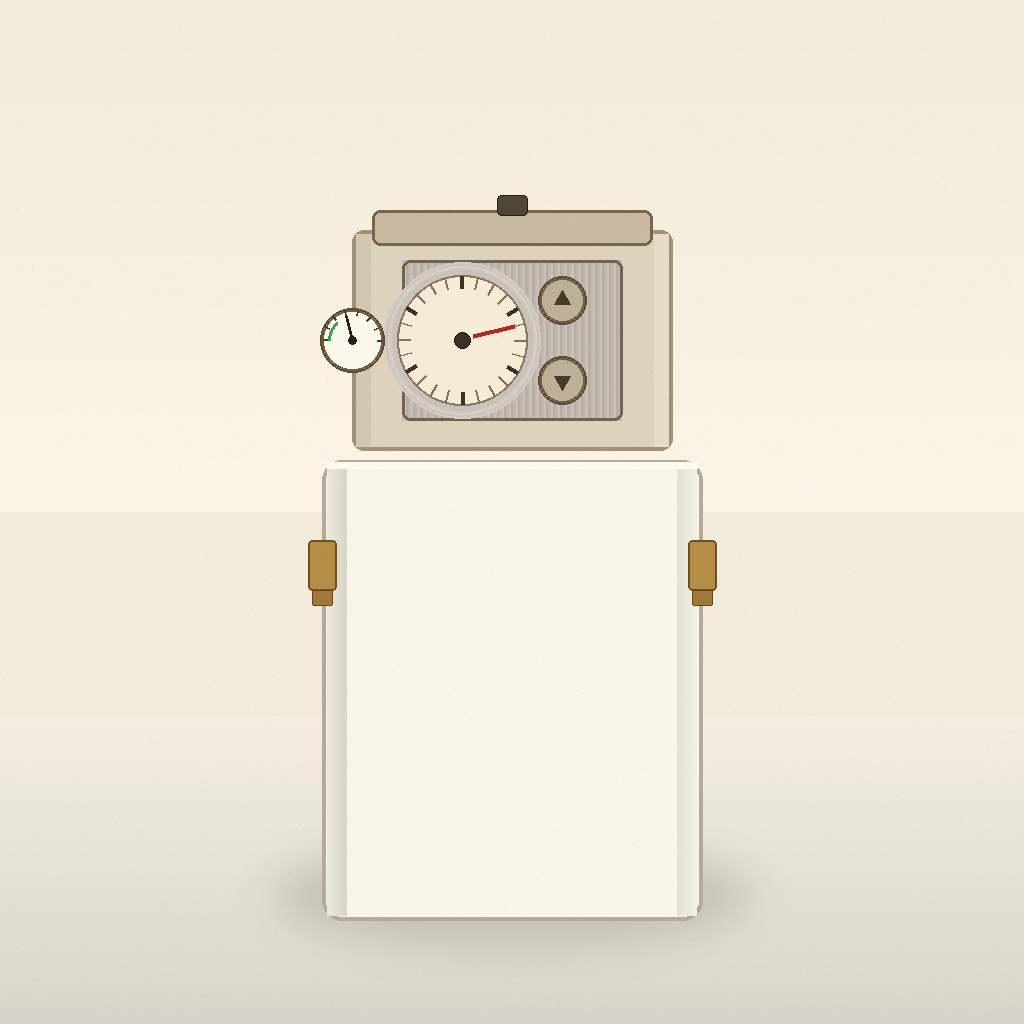
A regen cycle isn’t one thing — it’s four phases run in sequence by the control valve. Most residential softeners (1.0–1.5 cu ft tanks) finish in roughly 55 minutes to 2 hours, depending on the valve programming and tank size.[3]
| Phase | Duration | What happens |
|---|---|---|
| Brine draw | ~30 min | Salt water from brine tank pulled into resin tank |
| Slow rinse | ~10–15 min | Brine slowly pushed through resin, hardness flows to drain |
| Fast rinse | ~10 min | Clear water flushes remaining brine out of resin |
| Brine refill | ~5 min | Fresh water added to brine tank to dissolve salt for next cycle |
The total comes out to ~55 min on a tight-programmed valve or up to ~2 hours on a default-programmed unit. Most softeners are factory-set to start at 2 AM so the cycle finishes before morning peak demand — that’s why you hear the softener running if you happen to be up at night and notice hard water briefly during the cycle. If you want the chemistry behind why each phase matters, see how ion-exchange regen works.
Water and salt cost per cycle
Per cycle, a typical residential softener uses:[1]
- Water: 30–65 gallons per cycle for 1.0–1.5 cu ft tanks
- Salt: 6–15 lbs per cycle, depending on settings and tank size (rough rule: 3 lbs salt per cu ft of resin per regen)
Add it up over a year for a typical home (4 people × 75 gal/day × 20 gpg, 32,000-grain tank, ~73 regen cycles/year):
- Salt: ~657 lbs/year = ~16 bags of 40-lb salt at $5–$15/bag = $80–$240/year in salt
- Water: ~73 cycles × ~45 gal avg = ~3,285 gallons/year = $10–$25/year in water, depending on your municipality
Total operating cost lands around $90–$265/year, dominated by salt. That’s why the next section matters.
Skip / Don’t #1: don’t use rock salt to save a few dollars per bag
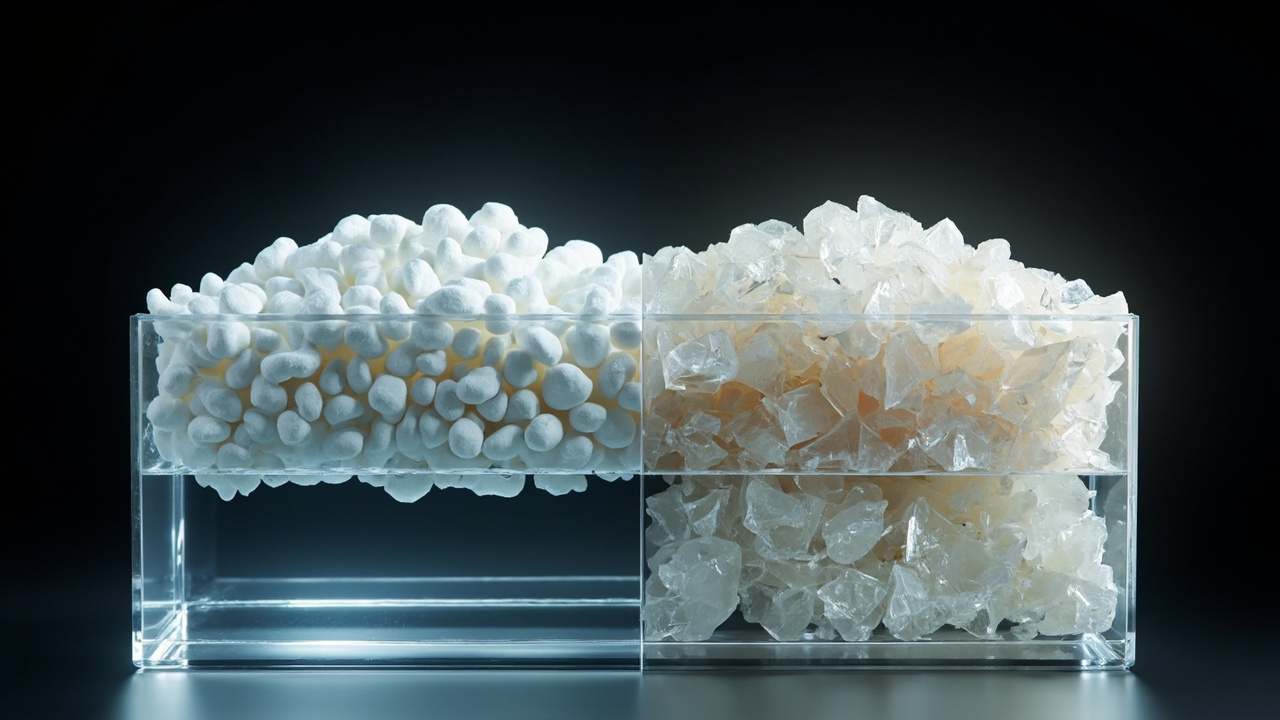
Rock salt runs $3–$5 per bag versus $5–$15 for pellets or solar crystals. The “savings” usually pay for a plumber visit. Rock salt contains 5–15% insoluble impurities (mud, calcium sulfate, gypsum) that accumulate in the brine tank over hundreds of cycles. Eventually that sediment fouls the brine valve and the softener stops regenerating at all — and the fix is a 50 lb bag of solar salt plus a manual regen to flush the brine tank, not a service call.
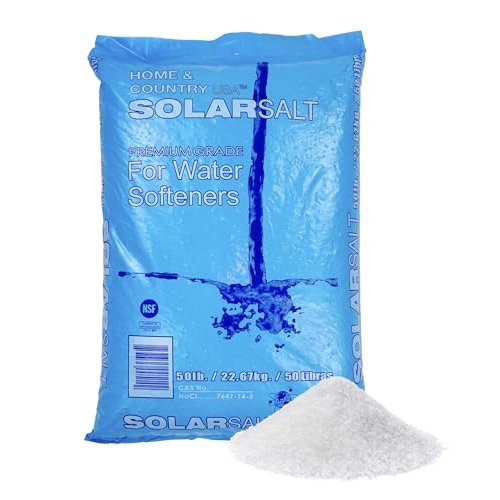
For any salt-based softener, use pellets or solar crystals. The few extra dollars per bag protect the valve. If you want lower sediment, a 50 lb bag of solar salt is the high-purity evaporated option — fewer insoluble impurities means less brine tank cleanup over the life of the softener. For the full breakdown of pellets vs crystals vs blocks, see water softener salt overview.
Metered vs timed regen heads (and when to override)
The control head decides when the cycle runs. There are two flavors:
- Metered (demand-initiated) — triggers regen based on gallons used. Most modern softeners (Fleck 5600SXT, Clack WS1, GE GXSH40V, Kenmore 625) ship this way. Saves salt and water because it only regens when capacity is actually depleted.
- Timed (calendar) — triggers regen on a fixed schedule (every X days). Older units or very low-use households. Wastes salt on weeks with low water use.
If you have a metered head and your tank is regenerating every other day, your hardness setting is too high — drop it 5 gpg and re-test the output. If you have a timed head, set the schedule to match your actual capacity math rather than the factory default.
Skip / Don’t #2: don’t set the hardness number above your actual incoming gpg
Every +1 gpg you add to the control head shortens the cycle interval. A “+5 gpg safety margin” cuts your interval by 20–25% — meaning you regenerate more often, use more salt, and waste more water, all for capacity you didn’t actually need. Match your measured hardness; if you have well water, test before setting.
Override after a long absence
Even metered heads won’t trigger a regen if no water flowed. If you’ve been away for a week, run a manual regen when you get back. This is the most common cause of “soft water suddenly hard again” after returning from vacation.
How to manually trigger a regen (Fleck / Clack / GE)
This is the section most readers bookmark. The button sequence is brand-specific — there is no universal “Regen” code that works on every control head.
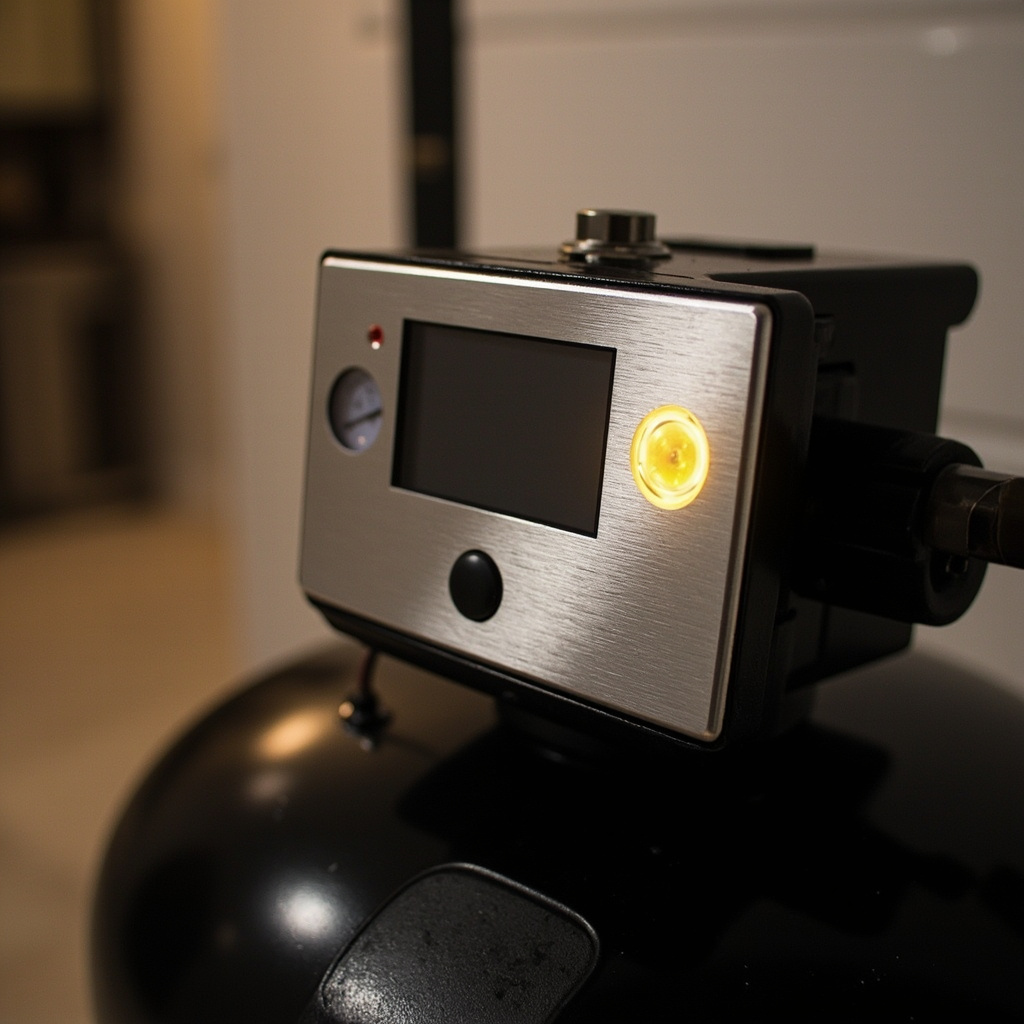
Fleck 5600SXT (the most common homeowner-grade valve)
- Close the bypass valve if it’s open (open bypass = softener is offline, no regen will do anything).
- Press and hold the Regen button on the control head for 5 seconds.
- Display shows “Regen Tonight” — the softener runs a full cycle at the next scheduled 2 AM start.
- To force immediate regen: press Regen, scroll to “Regen Now,” press Regen again to confirm.
- Cycle runs ~2 hours. Don’t use hot water during the cycle.
Clack WS1
- Press and hold the Regen button for 3 seconds.
- Display shows “REGEN?” — press Menu/Enter to confirm.
- Cycle starts immediately.
GE GXSH40V / Kenmore 625 series
- Press the Regen button once.
- Display shows “REGEN TONIGHT” — cycle runs at next 2 AM.
- To force now: press and hold Regen for 3 seconds.
For a deeper Fleck settings reference including hardness number, time of day, and reserve capacity, see Fleck 5600SXT settings.
Skip / Don’t #3: don’t trigger a manual regen during peak demand
30–65 gallons of water going to drain while you’re showering is wasteful — you can’t use soft water during the cycle. Trigger regen before bed, after work, or any time demand is low. If your softener is set to start at 2 AM by default, you usually don’t need to do anything manually. After a manual regen completes, a quick hardness test strip on the soft water confirms the cycle actually restored capacity — if it reads above 0 gpg, the regen ran but didn’t fully reset the resin.
Keep regen cycles hitting spec (salt + cleaner choices)
Two situations change what salt and cleaner you should pair with the regen cycle: low-sodium households, and homes with iron in the water.
If you’re on a low-sodium diet
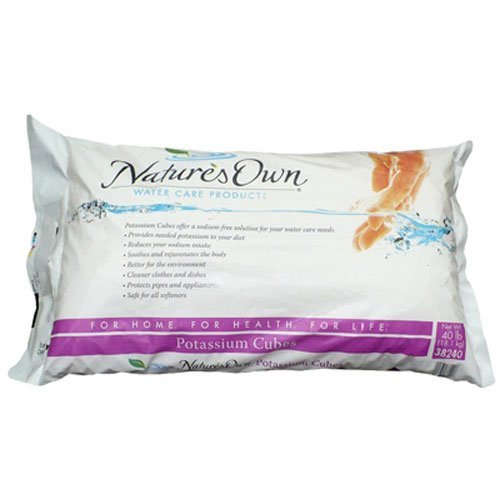
Sodium-based salt adds about 7.5 mg of sodium per quart of softened water per gpg of hardness removed. EPA’s Secondary Drinking Water advisory is 20 mg/L for individuals on sodium-restricted diets.[4] If your clinician has you watching sodium, switching to potassium chloride salt keeps the same regen cycle but adds potassium instead of sodium. The regen cycle math and capacity calculation stay exactly the same — only the brine composition changes. (If your clinician has you on a strict sodium restriction, ask them before switching — potassium chloride salt is not appropriate for everyone.)
For the honest limits of salt-free systems (they don’t regenerate, they don’t bring hardness to zero on a test strip), see salt vs salt-free honest limits.
If you have iron in your water (above 0.3 ppm)
Iron fouls the resin beads over time. Symptom: regen frequency keeps creeping up even though your hardness setting hasn’t changed, and the soft water looks faintly yellow after a regen. Add a packet of Morton MWSC cleaner to the brine tank every 4 months — it dissolves during the regen cycle and resets the resin bed. Universal compatibility with most residential valves.
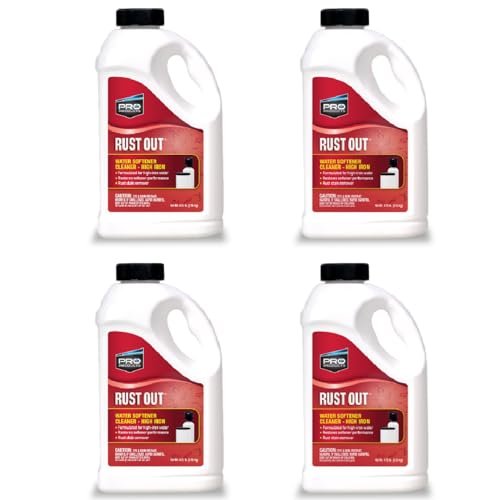
For well-water households with high iron (above 1 ppm), a single monthly dose is rarely enough. The Rust Out 5 lb pail covers about a year of quarterly treatments and is cheaper per dose than the small box. If your regen capacity is dropping fast and a 4-month Morton MWSC cycle isn’t catching up, move to the Rust Out 5 lb pail and shorten the interval to monthly. For the deep dive on iron and resin maintenance, see water softener cleaner and iron removal.
Common mistakes
- Setting the hardness number too high on the control head. A “+5 gpg safety margin” cuts cycle interval by 20–25% and burns salt you didn’t need to use. Match your measured gpg, not your fear. Confirm with a hardness test kit after setting. If you have iron in the water (above 0.3 ppm), add 4 gpg to the setting to compensate — but that’s a separate adjustment, not a “safety margin.”
- Running a manual regen at peak hours. 30–65 gallons to drain while you’re trying to shower. Trigger regen before bed or after work, not during morning routines. (See Fleck 5600SXT settings if you need to change the default 2 AM start time.)
- Ignoring the brine tank salt level. Salt below half-tank creates an air pocket that prevents proper brine draw — the regen runs but doesn’t actually restore capacity. Refill before the level drops below half. If salt is present but unmoved, see salt bridge in brine tank — that’s a different problem from running low.
- Using rock salt because it’s cheaper. Rock salt’s 5–15% insoluble impurities accumulate in the brine tank and foul the brine valve over hundreds of cycles. The “savings” usually pay for a plumber. Use pellets or solar crystals — switching to a 50 lb bag of evaporated solar salt usually pays for itself the first time you skip a service call.
- Calling a “repair tech” for a salt-bridge problem. A salt bridge (hardened crust of salt in the brine tank) is a 10-minute DIY fix — push a broom handle into the salt to break the bridge, then run a manual regen. If regen still doesn’t restore soft water afterward, head to the water softener not working checklist.
When to call a pro
Keep DIY if: testing hardness, setting the control head hardness number, adding salt, breaking a salt bridge, swapping a resin cleaner packet, triggering a manual regen after a long absence.
Call a licensed plumber if:
- Cutting into the main supply line or relocating the unit
- Active leak at fittings, drain line, or brine tank overflow
- Control board / electrical faults beyond a manual reset
- Brine valve leaking continuously even when not in regen
- Resin replacement (resin typically lasts 10–15 years; if regen keeps creeping up after cleaning, the resin itself is exhausted)
If the unit won’t regenerate at all and you’ve confirmed power and salt level, head to the water softener not regenerating troubleshooting page before calling anyone.
Before the call, run these two quick checks — they save the trip charge in about half of “broken softener” service calls:
- Run a manual regen and time it. If the cycle completes in ~2 hours and you still get hard water, the regen ran but didn’t restore capacity — that’s a salt setting or resin issue, not the control head.
- Test your soft water output with a hardness test kit after the manual regen. If it reads 0 gpg, your softener is working and the original complaint is something else (cold-water line bypassing the softener, a single fixture issue, etc.).
We do not rank “water softener repair” services or local installer directories.
Related
- How water softeners work — the ion-exchange chemistry behind each regen phase
- Water hardness explained — gpg, ppm, and how hardness drives regen frequency
- Water softener salt overview — pellets vs crystals vs blocks
- How to choose a water softener — sizing chart and feature checklist
- Softener size calculator — recalculate tank size if your interval is way off
- Fleck 5600SXT settings — deeper reference for the most common control valve
- Water softener cleaner and iron removal — when resin needs more than salt
- Salt bridge in brine tank — break a bridge in 10 minutes
- Water softener not regenerating — full troubleshooting tree when regen won’t run
Key takeaways
- Most homes regenerate every 3–7 days, taking ~2 hours, using 30–65 gallons of water and 6–15 lbs of salt per cycle.
- Frequency = capacity ÷ daily grains removed. Set the hardness number on the control head to your measured gpg, not higher.
- Manual regen takes 5 seconds: hold Regen on Fleck, press Regen on Clack, press Regen on GE. Don’t run during peak demand.
- Pellets or solar crystals beat rock salt for valve longevity. Skip the “cheap” rock salt unless your tank is rated for it.
- Iron-fouled resin shortens cycles — add a resin cleaner every 4 months. If regen keeps creeping up after cleaning, the resin itself may be exhausted (10–15 year lifespan).
Sources
[1] Water Quality Association — industry trade body position statement on regeneration cycle. https://www.wqa.org/
[2] US Geological Survey — water hardness unit conversion (gpg ↔ mg/L). https://water.usgs.gov/edu/hardness.html
[3] Pentair (Fleck) 5600SXT spec and GE Appliances GXSH40V spec — control valve phase timing and manual regen button sequences.
[4] EPA Secondary Drinking Water Regulations — sodium advisory for softened water. https://www.epa.gov/sdwa/secondary-drinking-water-regulations