If the brine tank looks full but hard water is back on every faucet, you don’t need a new softener slogan—you need the right salt form and a clean brine path. Buying the wrong bag, or ignoring a salt bridge, is how people keep scrubbing glass while the resin never gets a full regen.
Quick answer
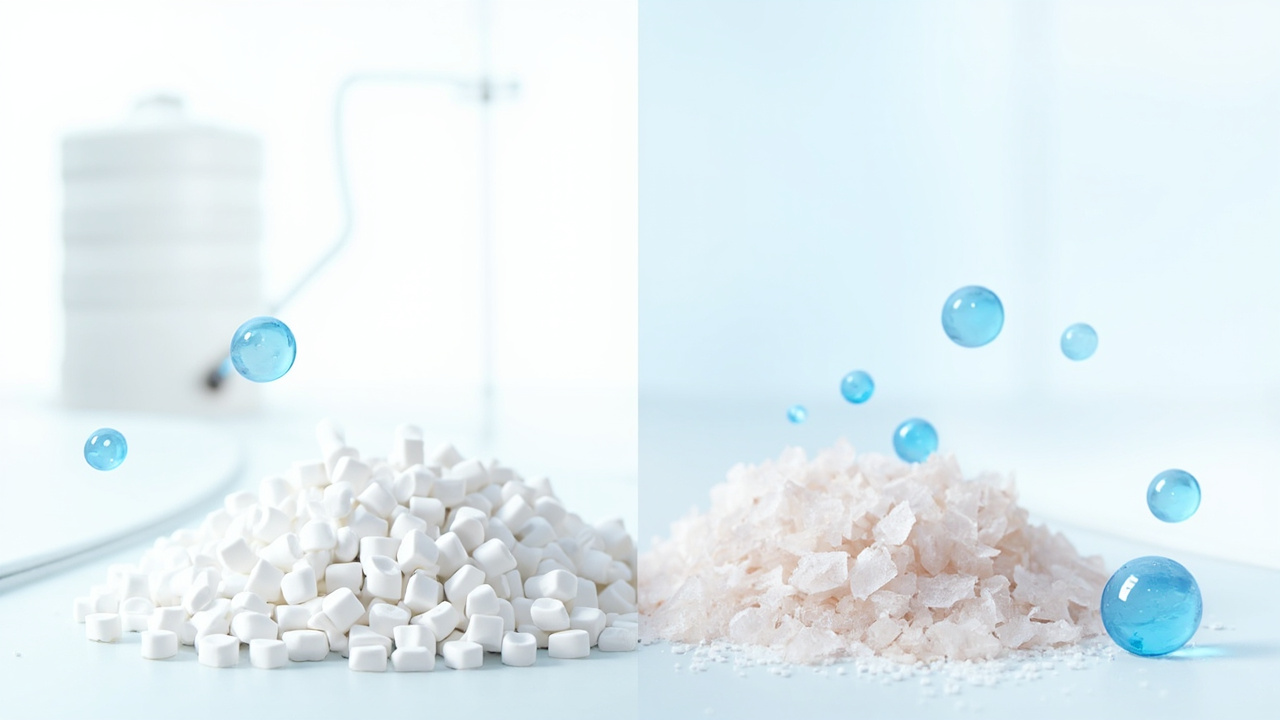
Salt pellets and solar salt crystals both regenerate a water softener’s resin with sodium (or potassium) chloride. Pellets are denser and usually dissolve more evenly in deep brine tanks; crystals (solar salt) are looser, often cheaper per pound, and can bridge or mush more easily if the tank sits wet. Skip crystals if your unit’s manual requires pellets or blocks. Pick by tank design, humidity, and how often you check the brine tank—not brand slogans.
What both are for (regeneration)
Why the softener needs salt at all
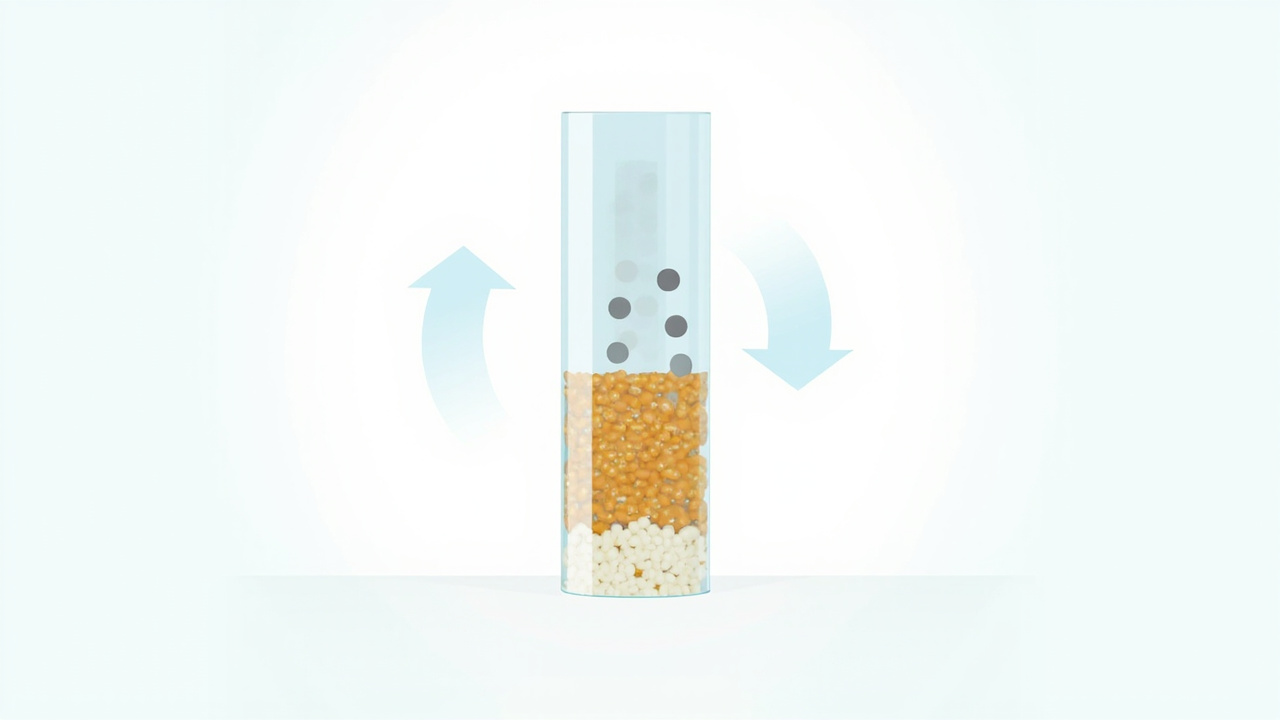
A salt-based softener doesn’t “filter hardness out” like a carbon cartridge. It runs ion exchange: resin beads hold sodium or potassium ions and swap them for calcium and magnesium—the minerals behind scale and spotting. When the resin is loaded with hardness, the control valve runs a regeneration cycle. Concentrated brine washes hardness off the resin and sends it to drain.
Salt’s only job in a standard softener is to make that brine. Wrong form rarely wrecks a unit overnight, but wrong form plus neglect leads to salt bridges, mush, weak brine, and hard-water breakthrough. USGS classifies hardness (as CaCO₃) roughly as soft (0–60 mg/L), moderately hard (61–120), hard (121–180), and very hard (above 180). Many U.S. homes sit in the hard or very hard bands—that’s why people own softeners in the first place. For unit talk, 1 gpg ≈ 17.1 mg/L as CaCO₃; if you still don’t know your number, start with what hard water is and water hardness basics, not a bulk salt pallet.
If you want the cycle steps in plain language, pair this page with what hard water is and water hardness basics first—then how water softeners work for the cycle and water softener salt overview for the full catalog. This page stays on pellets vs crystals vs blocks.
Softener vs filter vs RO (one screen)
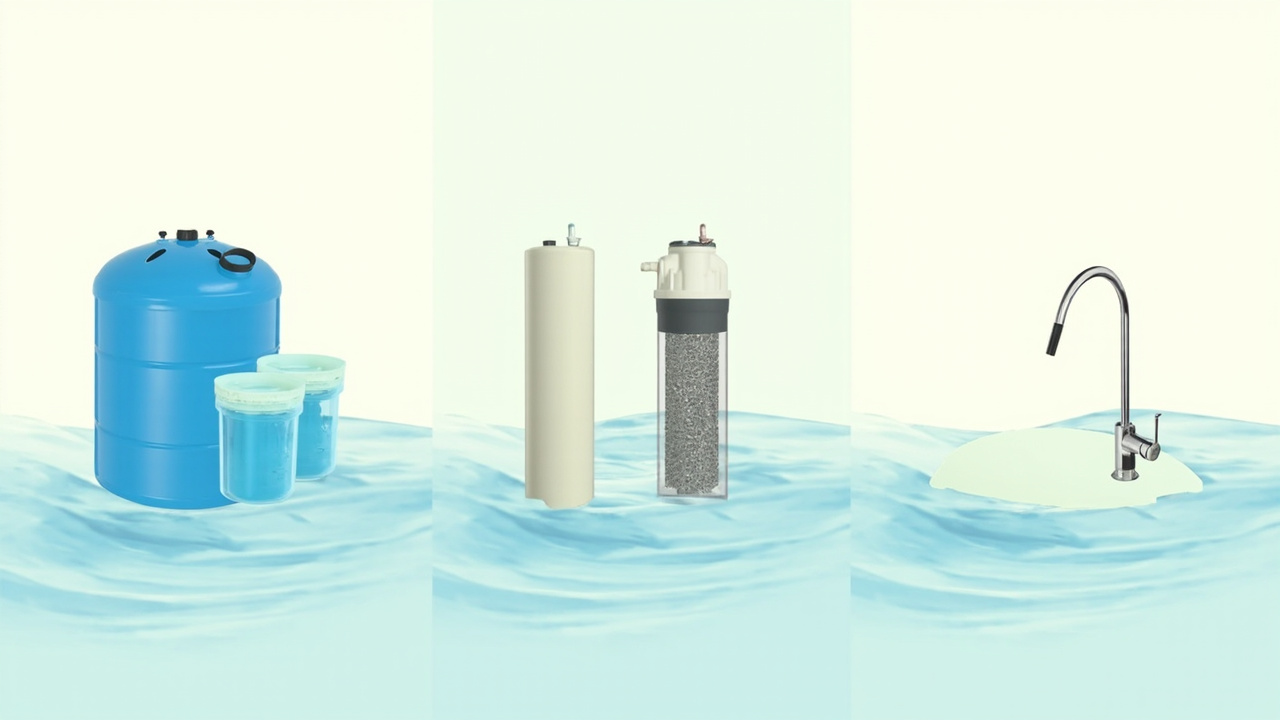
Before you obsess over bag shape, make sure salt is even the right lever:
- Softener (salt): swaps hardness minerals—fixes scale and spotting on fixtures when it’s regenerating correctly.
- Whole-house carbon/sediment: improves taste, chlorine, and dirt—not softening.
- RO (usually under sink): polishes drinking and cooking water—not every shower.
If you only care about drinking taste, RO may matter more than which salt bag you buy. Salt form won’t turn a carbon filter into a softener.
What pellets vs crystals is not
- Not a “Best softener salts” ranked shelf.
- Not a full catalog of potassium salt, high-purity evaporative grades, or every OEM SKU—those belong on the salt overview.
- Not permission to pour ice-melt, rock salt, pool salt, or table salt into the brine tank.
- Not a salt-free “conditioner” discussion. Salt-free products usually do not bring hardness grains to zero on a strip; this article is about salt-based regeneration only.
Keep bags dry, off wet concrete seepage, and away from kids and pets when the brine tank lid is open.
Pellets
What pellets look like and how they behave
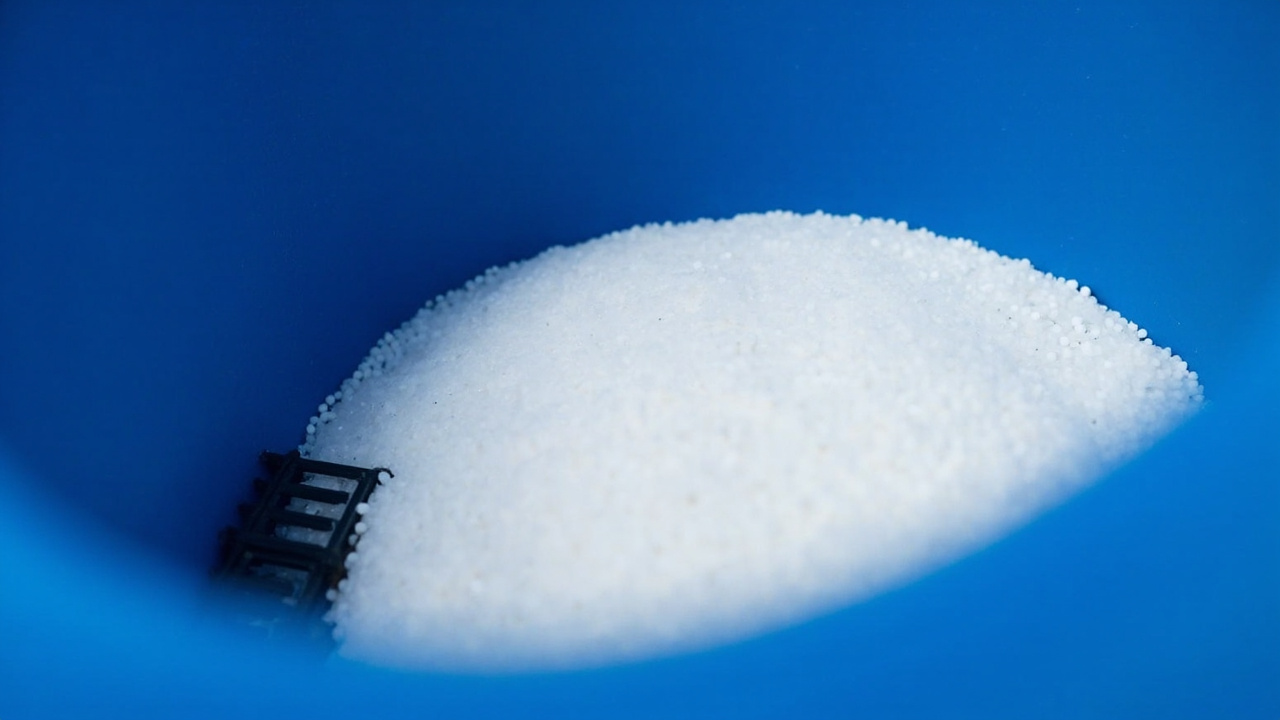
Pellets are compressed or extruded sodium chloride, often labeled around 99.5–99.8% purity on brand bags (that’s manufacturer label language, not an independent lab assay). They’re denser than loose crystals. In a tall brine tank with a grid or platform, pellets typically settle and dissolve in a more even pattern, which is why many manuals treat pellets as the default bag form.
Some lines add “clean and protect” style additives marketed for resin or tank cleanliness. Treat those claims as marketing unless you have a real NSF or spec sheet in hand—don’t assume pellet shape alone “cleans better” than plain salt.
When pellets are the better default
- If the owner’s manual says pellets (or “do not use rock salt”).
- If the brine tank is deep and you only open it every few weeks.
- If you’ve already fought mush or bridging with solar crystals in a humid garage or basement.
- Skip pellets-only shopping if the unit is a cabinet style that takes blocks/bars only—see the Blocks section below.
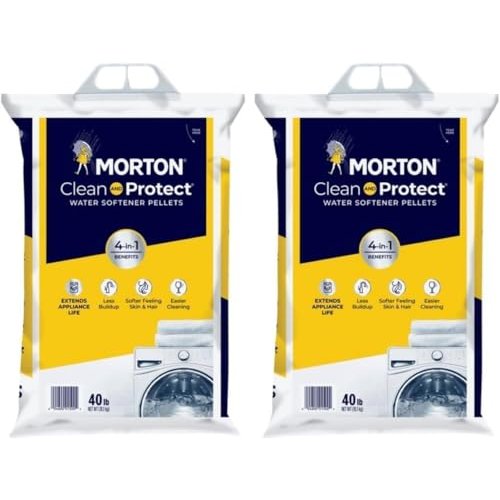
After those checks, a common default bag is Morton Clean and Protect pellets (2×40 lb). If you prefer a single larger pellet bag with high-purity labeling, Diamond Crystal Bright & Soft pellets (50 lb) is the same form factor with a different bag size.
Pellets still need a sane fill level. Dumping bag after bag above the max line doesn’t “make softer water”—it makes bridges and float problems more likely. Keep the brine pile below the max fill line and open the tank on a set schedule—not only when hard water returns. For the pour-and-level steps, see how to add salt.
Crystals / solar salt
What solar salt crystals are
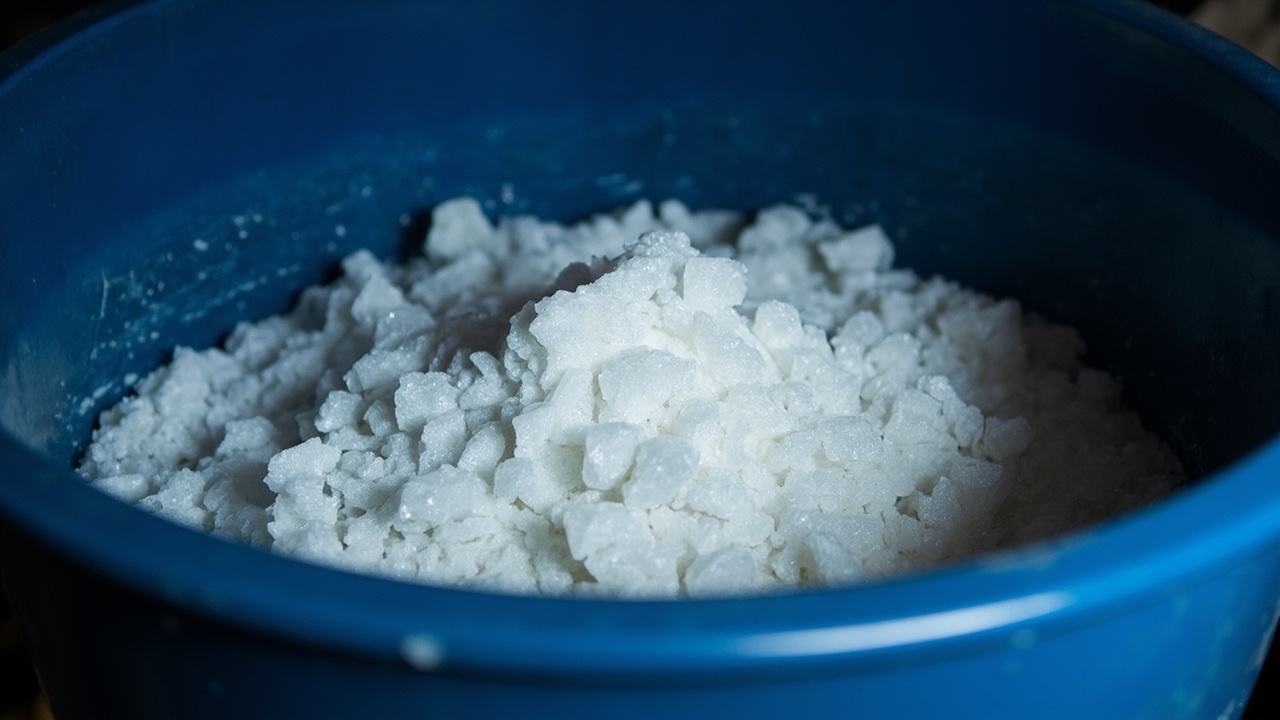
Solar salt crystals are loose sodium chloride made by evaporating seawater or brine in solar ponds. Bags are often 40–50 lb and show up as the budget-per-pound option at big-box stores and multi-packs online. They dissolve readily. The tradeoff is handling: a loose pile can form a hard crust (salt bridge) above standing water, or turn to sludge (mush) if water level, humidity, or fill habits are off.
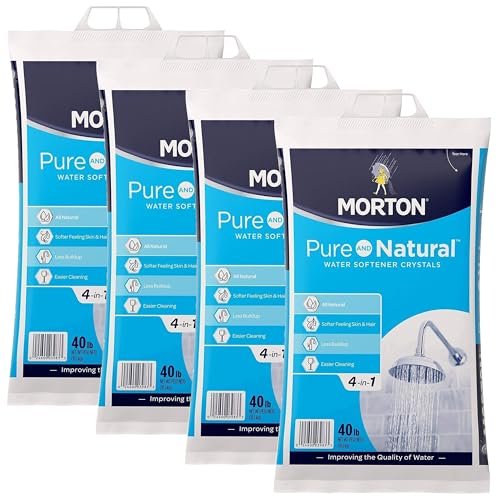
Brand lines you’ll see include Snow Shield All Natural Solar Salt and Morton Pure & Natural Solar crystals. “Solar” and “natural” on the bag describe how the salt was made—not a different softening chemistry. Softening capacity still depends on brine strength, resin condition, and valve settings.
When crystals make sense (and when to skip)
- If you check the brine tank often (every 1–2 weeks) and break crusts early.
- If cost-per-pound dominates and the manual allows solar salt / crystals.
- Skip / Don’t use crystals as first choice if:
- The manual requires pellets or blocks.
- You already fight bridges in a damp location.
- You want maximum “set and forget” between fill-ups.
Don’t assume “solar = better softening.” A cheaper crystal bag that bridges every month can cost more in hard-water scale than a denser pellet bag you check less often.
When crystals fit the manual and your inspection habit, a straightforward budget bag is Snow Shield All Natural Solar Salt (50 lb). If you want a known-brand multi-pack in crystal form, Morton Pure and Natural solar salt crystals (4×40 lb) is the crystal path—not pellets, despite how some product pages mix words.
For bridge and mush cleanup habits, re-check hardness context on hard water vs soft water after you pick a form—brine-tank care is the next step when crusts keep returning—see brine tank problems.
Blocks (when they show up)
Who actually needs salt blocks / bars
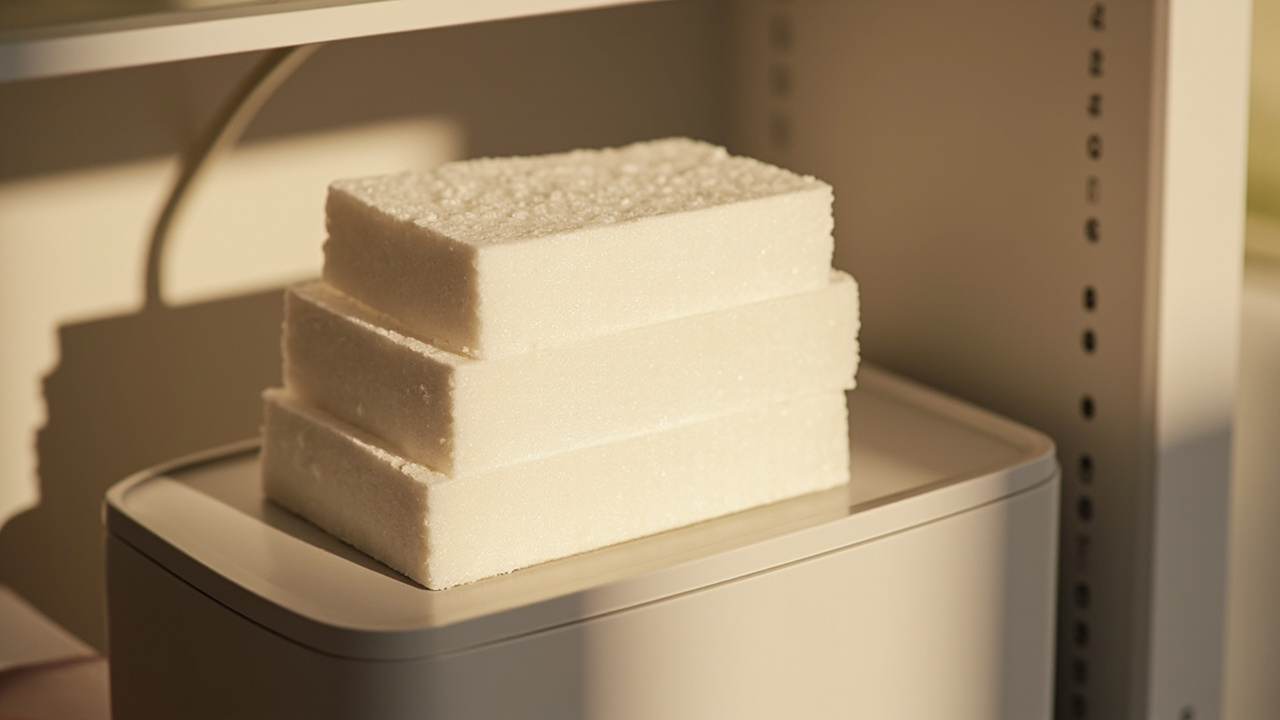
Some cabinet or compact softeners are designed for block / bar salt that sits on a platform—not loose bags dumped full-depth. Blocks dissolve slowly on purpose. Dumping loose pellets into a block-only cabinet can jam the platform or under-brine the resin.
- If your model is block-only → buy blocks, not pellets or crystals “because a forum said so.”
- If you have a standard tall open brine tank → blocks are usually unnecessary and pricier per pound.
Don’t buy blocks for a standard open brine tank just to try something different. That’s a skip branch: wrong form, higher cost, no upside.
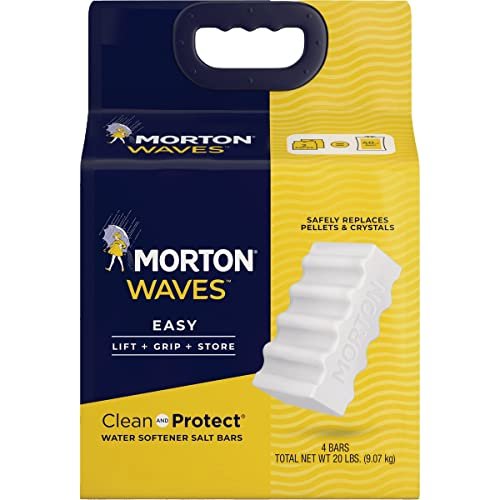
Only when the manual shows bars or blocks, use Morton softener salt bars (4-pack). If the manual never mentions bars, leave this product alone.
What to pick (if-then)
Three questions before you add to cart
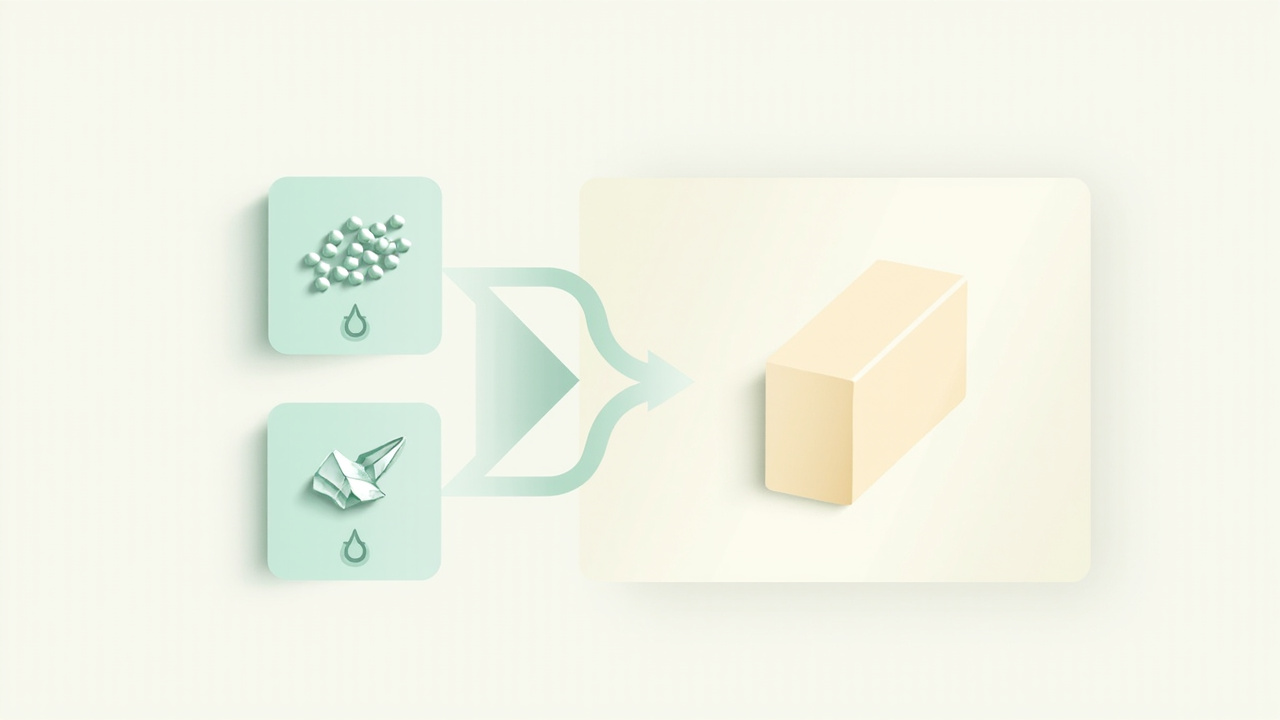
- What does the manual allow? Pellets, solar crystals, blocks, or potassium only?
- How often do you open the brine tank? Weekly checker → crystals can be fine; monthly-or-less → lean pellets.
- Where does the unit live? Humid basement or garage → pellets are usually more forgiving; climate-controlled utility room → either form if you maintain it.
If-then cheatsheet
| If… | Then… | Skip… |
|---|---|---|
| Manual says pellets | Buy pellets | Rock salt, ice melt, pool salt |
| Manual allows solar/crystals + you inspect often | Crystals OK | Ignoring bridges for months |
| Cabinet takes bars only | Blocks | Dumping loose pellets into a bar unit |
| Water feels hard after long neglect / mushy brine | Fix brine level, break bridges, consider resin cleaner, then lock one salt form | More random bags without diagnosis |
| You don’t know hardness gpg yet | Test first — salt form won’t size the softener | Buying a new softener “because salt is wrong” |
Don’t switch forms every bag without a reason—consistency helps you learn a normal dissolve rate. Don’t overfill past the manufacturer fill line. Don’t jump to potassium salt unless you need low-sodium discharge and the valve supports it (that’s an overview-page deep dive, not this compare).
Decision leaves (buy after the questions)
- Manual pellets / deep tank / low check frequency → start with Morton Clean and Protect pellets or Diamond Crystal 50-lb pellets.
- Manual allows crystals + you open the tank often → Snow Shield All Natural Solar Salt or Morton solar crystals 4-pack.
- Block/bar cabinet only → softener salt bars for block systems.
- Neglected mush, iron tint, or slimy-feeling resin after long skip → correct salt form first, then schedule a liquid resin cleaner. Cleaner is maintenance, not a substitute for reading the manual.
If hardness breakthrough continues after salt and brine are fixed, stop bag-swapping and re-check whether the unit is even sized for your water hardness load instead of buying yet another bag style. For a broader softener failure tree, see water softener not working. Sizing the unit itself is a separate path—use the softener size calculator as a starting point, not a guarantee.
Common mistakes
- Using ice-melt, rock salt, or pool salt. Wrong additives and insolubles can foul the tank and valve. Stick to bags labeled water softener salt (NaCl or KCl).
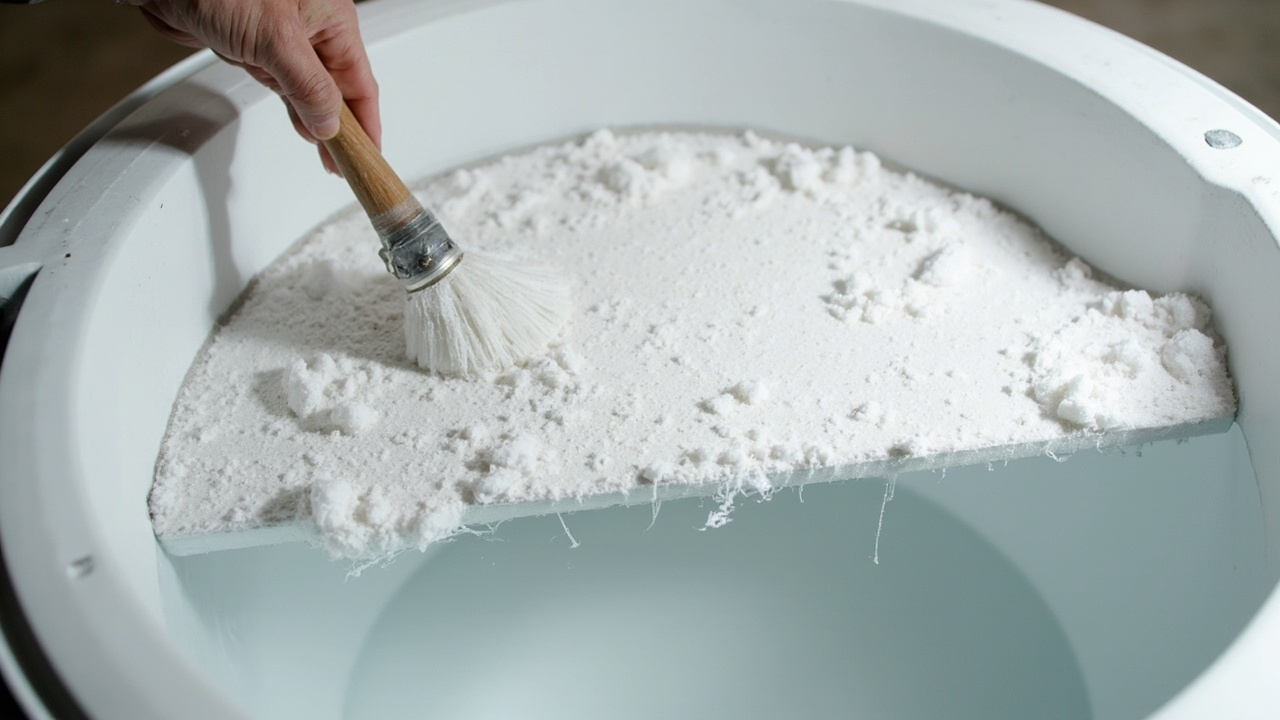
- Ignoring a salt bridge. A hard crust can look “full” while the grid sits in empty water → weak brine → hard water returns. Break gently with a broom handle; never smash the tank wall. If bridges keep returning after you fix fill habits, switch toward pellets and treat brine-tank care as the next maintenance job—not another random bag—see brine tank problems.
- Switching pellets↔crystals to “fix” hardness breakthrough. Breakthrough is often settings, exhausted resin, empty brine, or a half-open bypass—not the pellet logo on the bag. Diagnose settings and brine path before you change form again—start from what hard water is so you are not chasing the wrong lever—or open water softener not working.
- Overfilling the brine tank. Salt above the max line or blocking the float causes the same bridge/mush mess people blame on “bad salt.” Stay under the manufacturer fill line and leave headspace above the pile. Refill steps: how to add salt.
- Buying mystery bulk bags with no form clarity when you already have iron or manganese issues. You may need upstream iron treatment plus a scheduled resin cleaner—not a random cheaper bag that hides the form on the label.
When to call a pro
Keep DIY if: reading the manual’s allowed salt forms, adding salt, breaking a salt bridge gently, wiping the grid area, running a cleaner cycle the manual allows, or checking bypass position.
Call a licensed plumber if:
- The brine tank or fittings are actively leaking
- The drain line needs code-compliant air gap work or relocation
- The control head won’t power on, or electrical faults go past a simple reset
- You’re cutting into the main or moving the softener
We don’t rank local installer directories. Softened water is higher in sodium; if someone is on a strict sodium diet, ask their clinician about drinking softened water—we don’t give medical advice.
Related: salt overview · how to add salt · brine tank
- What is hard water — signs, gpg, and why softeners exist
- Hard water vs soft water — what actually changes at the faucet
- Water hardness basics — units, ranges, and testing
- Softener size calculator — grain capacity starting point Related: water softener salt, how to add salt, brine tank problems, softener not working, how softeners work.
Key takeaways
- Pellets and crystals both make brine—the softener cares about brine strength and maintenance more than bag art.
- Default to pellets for deeper tanks and less frequent checks.
- Crystals / solar salt can be fine if allowed and you watch for bridges.
- Blocks are for block-designed cabinets—not a universal upgrade.
- Read the manual’s allowed salt forms before bulk-buying.
- Bridges and mush are handling problems—fix process before blaming brand.
- Next steps: salt overview → how to add salt → brine tank care.